
Application Guides
Epoxy Fiberglass Tubes for High-Voltage Fuses: A Sourcing Guide for OEM Buyers
Review fuse type, material duty, end-cap interfaces, component inspection and OEM qualification before sourcing an epoxy fiberglass fuse insulation tube.
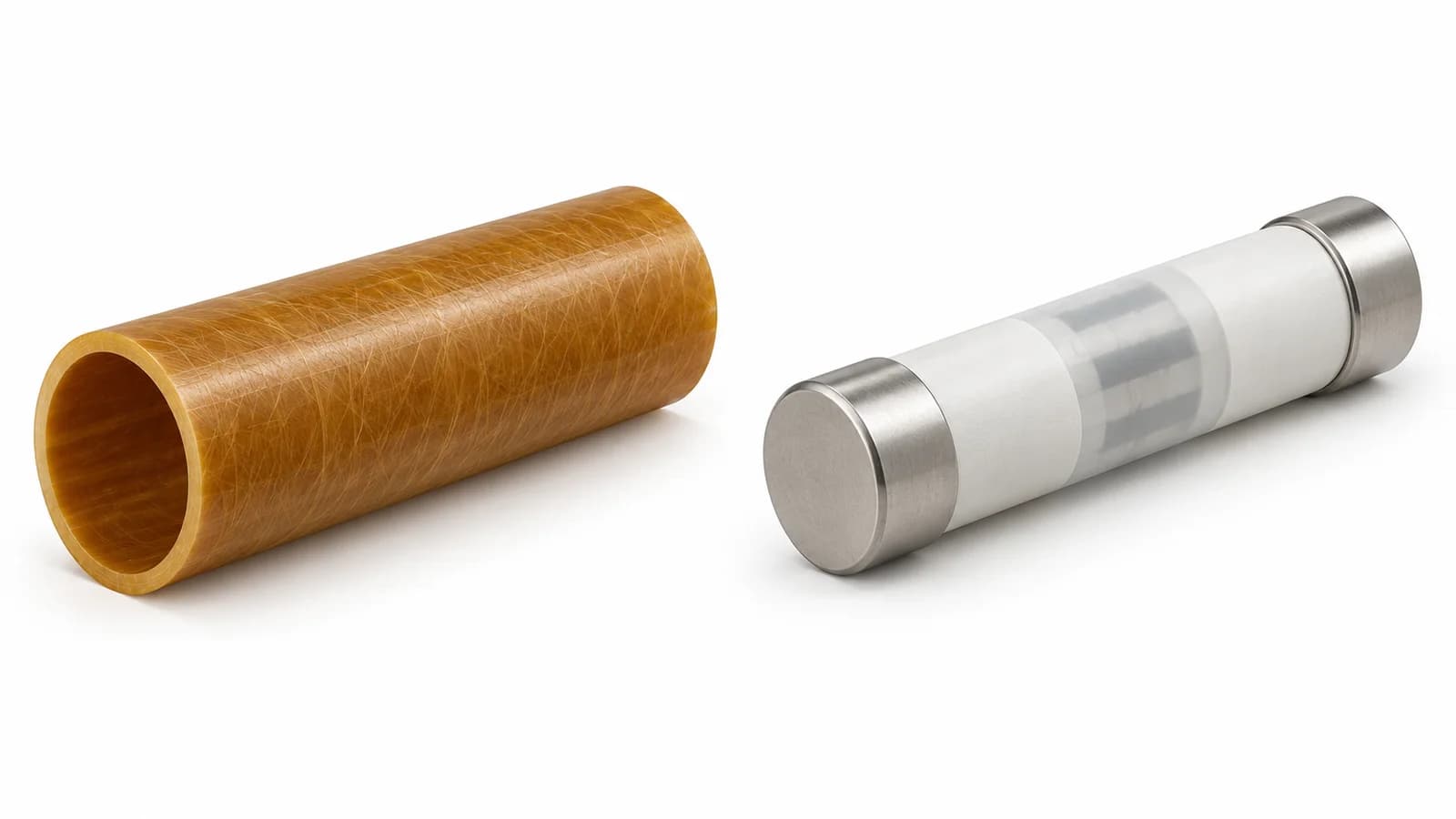
An epoxy fiberglass tube may serve as an insulating body or sleeve in a high-voltage fuse assembly, but it is not automatically an approved fuse housing. Before pricing, confirm the fuse design, interruption exposure, end-cap connection, and complete-fuse testing requirements.
The supplier can make a tube to a drawing; the fuse OEM remains responsible for interruption performance and assembly qualification. A bare filament wound tube is not interchangeable with an arc-rated liner, ceramic body, or tested fuse-link.
1. Identify the Fuse Type and the Actual Tube Function
“Fuse tube” can describe different components. A high-voltage current-limiting fuse-link is not an outdoor expulsion fuse cutout; their operating principles and material duties differ.
A current-limiting fuse may contain an insulating body, fuse elements, filler, and conductive ends. The body may have electrical, mechanical, thermal, and containment duties. An expulsion-fuse liner has a different function.
Identify the equipment and component: empty body, secondary sleeve, inner support, or engineered composite structure?
WEENOOR's epoxy fiberglass filament wound tubes are reviewed against drawings and application needs. Fuse suitability still requires confirmation.
2. Decide Whether the Proposed Material Matches the Duty
The word “fiberglass” does not define arc resistance, thermal behavior, or rupture containment. Nor does a general electrical-insulation claim establish suitability for a fuse-link body during fault interruption.
Determine whether the tube faces an arc or hot interruption products, or is shielded by a liner, filler, or housing. For an interruption enclosure, the OEM must define thermal, electrical, mechanical, containment, and qualification requirements.
Do not substitute a filament wound epoxy tube for a laminated tube or ceramic body based on appearance. Retain specified construction until the OEM approves alternatives. See filament wound versus laminated tubes.
IEC 60282-1:2020 addresses high-voltage current-limiting fuses. It does not turn any standalone tube into a compliant or tested fuse-link. The OEM should identify the relevant edition, product requirements, and assembly testing.
3. Put the End-Cap and Internal Interfaces on the Drawing
Even if material feasibility looks promising, the tube can still be unsuitable for assembly if the interfaces are undefined.
At each end, identify how the conductive cap or other terminal component attaches to the insulating body. Show the end engagement region, relevant surface finish, locating surfaces, and sealing or bonding requirements where applicable. State the approved joining method rather than asking the tube supplier to guess it.
Inside, indicate supports, filler, or clearance-sensitive parts. Identify bore cleanliness and inspection requirements.
Distinguish the tube after winding and curing from the part actually delivered: cut blank, finished bore, machined end zones, or another stage. If the OEM finishes machining, specify delivery allowances.
Evaluating a custom fuse insulation tube? Send your sectional assembly view, end-cap interface details, intended tube duty, and target quantity for a preliminary review.
Send Your Drawing4. Separate Tube Acceptance from Fuse Qualification
A dimensionally correct tube is not evidence that a fuse will safely interrupt a fault. Suppliers and OEMs should agree on two different acceptance levels.
| Review level | Typical responsibility | Evidence to define |
|---|---|---|
| Bare tube | Tube supplier, to the agreed order | Material identification, drawing dimensions, bore and end appearance, specified inspection records |
| Completed fuse-link | Fuse OEM and designated test parties | Electrical ratings, interruption tests, thermal behavior, enclosure integrity, and applicable standard requirements |
The boundary matters especially when the fuse body could experience heat, pressure, or arc products. No tube material should be advertised as universally arc-proof or pressure-proof based solely on its manufacturing method.
For the bare tube, WEENOOR's quality approach focuses on drawing review, dimensional checks, visible condition, and agreed inspection scope. Special material testing, traceability, or reports need to be specified rather than assumed.
5. Check Manufacturing Feasibility Before Fixing the Price
A fuse-related tube may be straightforward to quote as a blank but more complex as a finished, interface-controlled part. Practical cost and feasibility questions include whether a suitable mandrel is available, whether the requested wall and bore can be produced with the specified material, and how much end machining or additional inspection is needed.
Discuss prototype and repeat-order quantities separately; tooling and inspection arrangements may differ.
For complex end details, refer to the machining guide. The manufacturing overview explains the winding, curing, machining, inspection, and packing stages used for made-to-drawing review.
Define packaging for the finished bore, tube ends, and any prepared joining surfaces so transport does not compromise later assembly.
6. Send a Decision-Ready RFQ
A useful inquiry identifies the intended part without disclosing the OEM's entire fuse design. The supplier should receive enough information to decide whether the product fits its manufacturing scope.
Include a controlled drawing or redacted section, fuse category, tube function, specified material or approved alternatives, ID, OD, length, end-cap interfaces, delivery condition, inspection needs, and estimated quantity. Add only the thermal, electrical, and mechanical conditions relevant to the proposed tube.
Separate mandatory requirements from information still awaiting approval. If interruption-related performance is important, say explicitly that it is an OEM qualification requirement, not an assumed property of the tube.
This helps compare like-for-like component quotations.
FAQ
Can epoxy fiberglass replace a ceramic high-voltage fuse body?
Not by default. Replacement requires the fuse OEM to evaluate the material system, duty, geometry, and necessary qualification testing. The two materials should not be priced as direct substitutes without that review.
Is a tube supplier responsible for IEC 60282-1 compliance?
A tube supplier can agree to component specifications and inspections, but compliance of a completed fuse-link is a separate assembly-level matter. Responsibilities must be stated in the purchase documents.
Can we request a budget price with only basic dimensions?
An indicative discussion may be possible, but it should be labeled preliminary. Without material duty and end-cap details, a price may not represent the finished component.
What is the best drawing for the first inquiry?
Use a dimensioned tube drawing plus a simplified assembly section showing the end-cap engagement and the tube's position. Mark confidential or unconfirmed details appropriately.
Conclusion
For high-voltage fuse applications, the key sourcing decision is not simply whether an epoxy fiberglass tube can be made. It is whether the proposed material and component scope match the OEM's fuse design and validation responsibilities.
Need a made-to-drawing insulation tube for a fuse-related component? Send your part drawing, functional context, interfaces, expected quantity, and required inspection scope for review.
Send Your Requirements