
Buyer Guides
Filament Wound vs. Laminated Epoxy Fiberglass Tubes: How to Choose
Compare filament wound and laminated epoxy fiberglass tubes for electrical insulation, including structure, loading, dimensions, machining and application requirements.
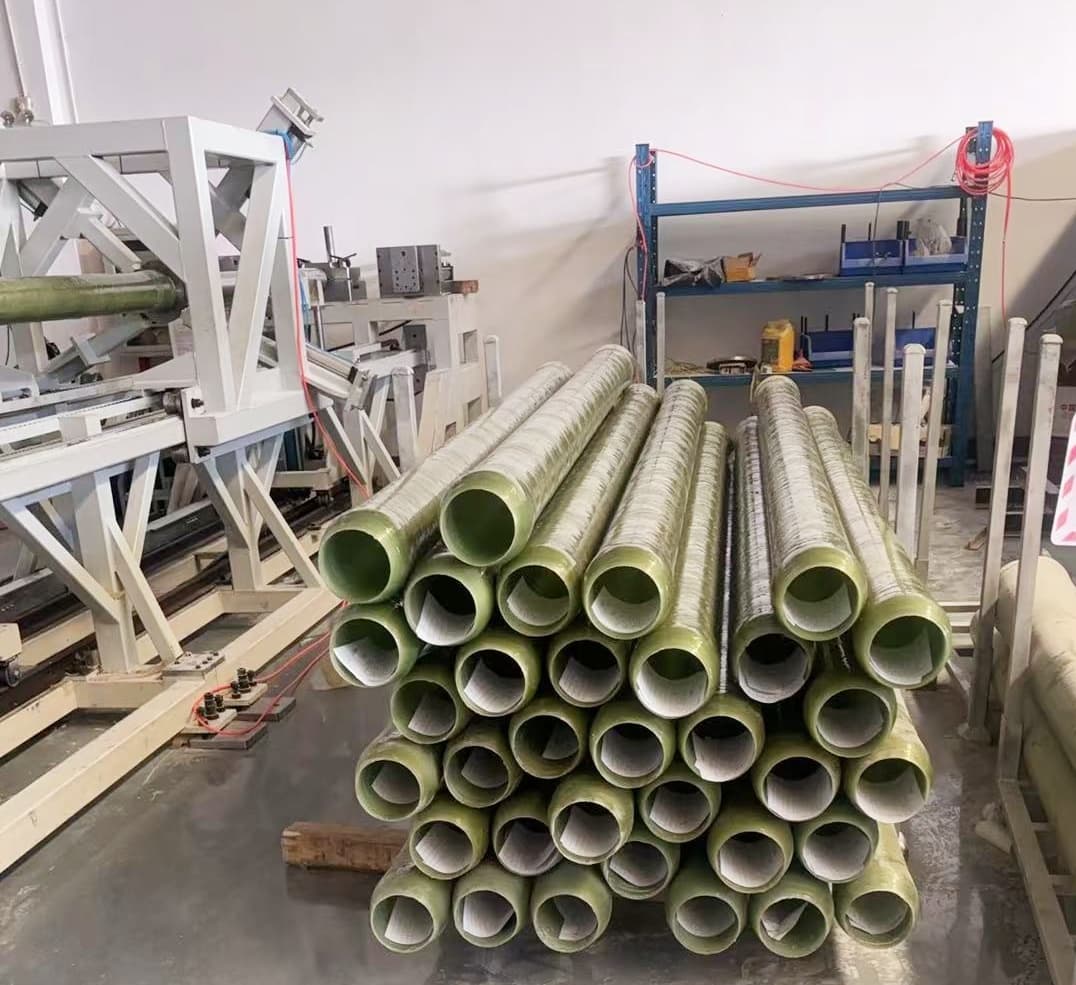
When an electrical insulation component requires a glass-fiber-reinforced epoxy tube, buyers may encounter two different product structures: filament wound epoxy fiberglass tubes and laminated glass epoxy tubes.
Both can be used as electrical insulation components, but they should not be treated as interchangeable simply because both contain glass fiber and epoxy resin.
The better choice depends on the application, load direction, tube dimensions, wall thickness, machining requirements, operating conditions and the specification that the finished component must meet.
For custom high-voltage equipment, the selection should therefore begin with the finished-part requirement, rather than with a material name alone. For product scope, review Products, and for common equipment contexts, review Applications.
What Is a Filament Wound Epoxy Fiberglass Tube?
A filament wound tube is manufactured by winding continuous glass fibers around a mandrel while the fibers are combined with an epoxy resin system.
The fiber placement can be arranged according to the required tube structure. After winding and curing, the tube can be cut and machined according to the customer drawing.
This manufacturing method is especially relevant when the tube serves both an electrical insulation role and a structural role.
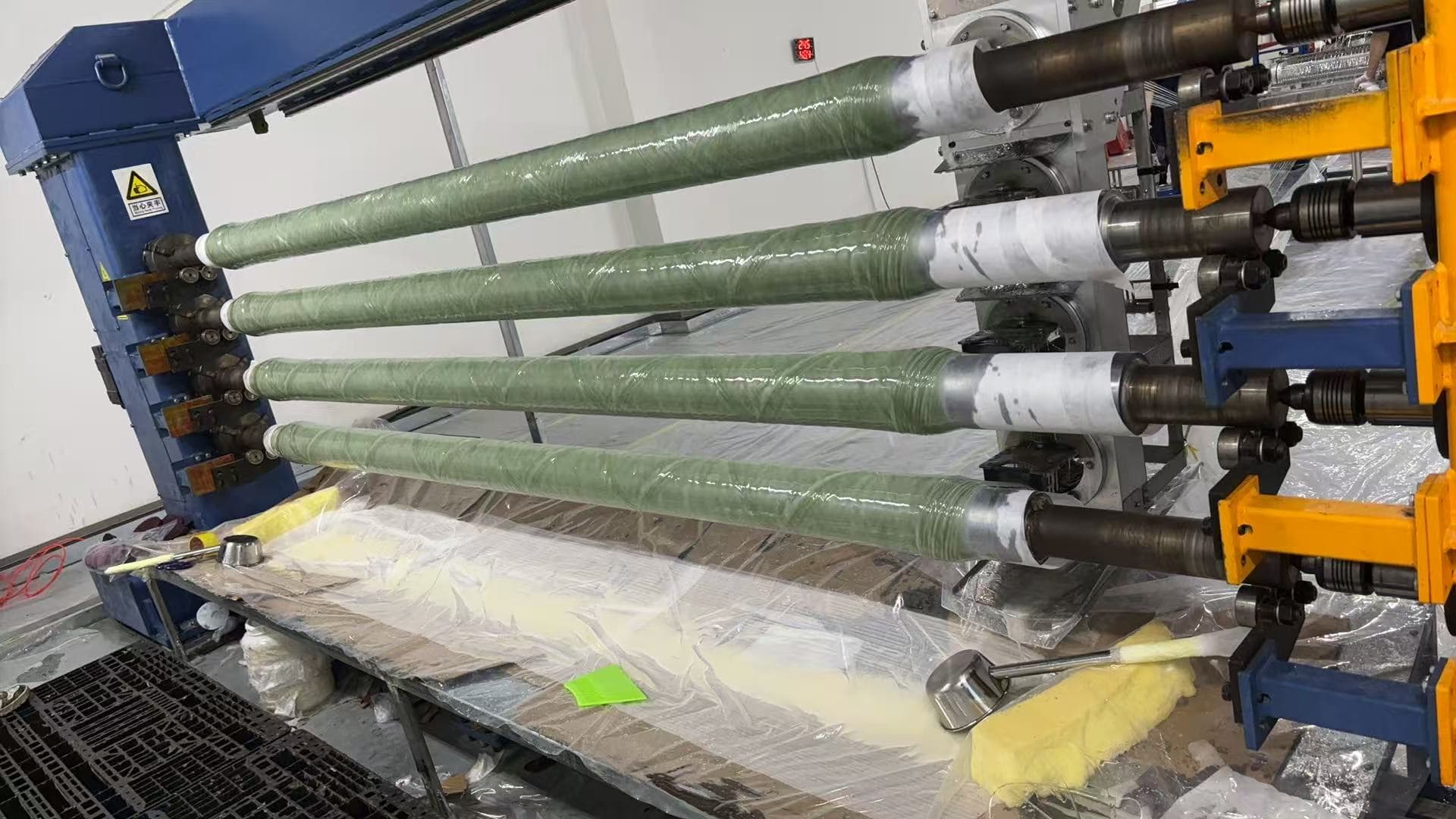
For more process context, see Understanding the Filament Winding Process for Epoxy Fiberglass Tubes and Manufacturing.
Typical discussion points include:
- Inner diameter and outer diameter
- Wall thickness
- Tube length
- Mechanical loading
- Assembly interfaces
- Machined ends, holes or slots
- Electrical insulation requirements
- Operating environment
- Required inspection or testing
Because the product is manufactured around the tube geometry itself, filament winding is well suited to custom cylindrical insulation components.
What Is a Laminated Epoxy Fiberglass Tube?
Laminated glass epoxy materials are produced from layers of glass reinforcement combined with a thermosetting resin system.
Depending on the product form and manufacturing process, the reinforcement may be based on woven glass cloth or another laminated glass structure.
Materials commonly described as G10, G11, FR4 or similar grades belong to the broader family of glass-reinforced thermosetting laminates.
They are widely used for electrical and mechanical insulation components and are available in forms such as sheets, rods and tubes.
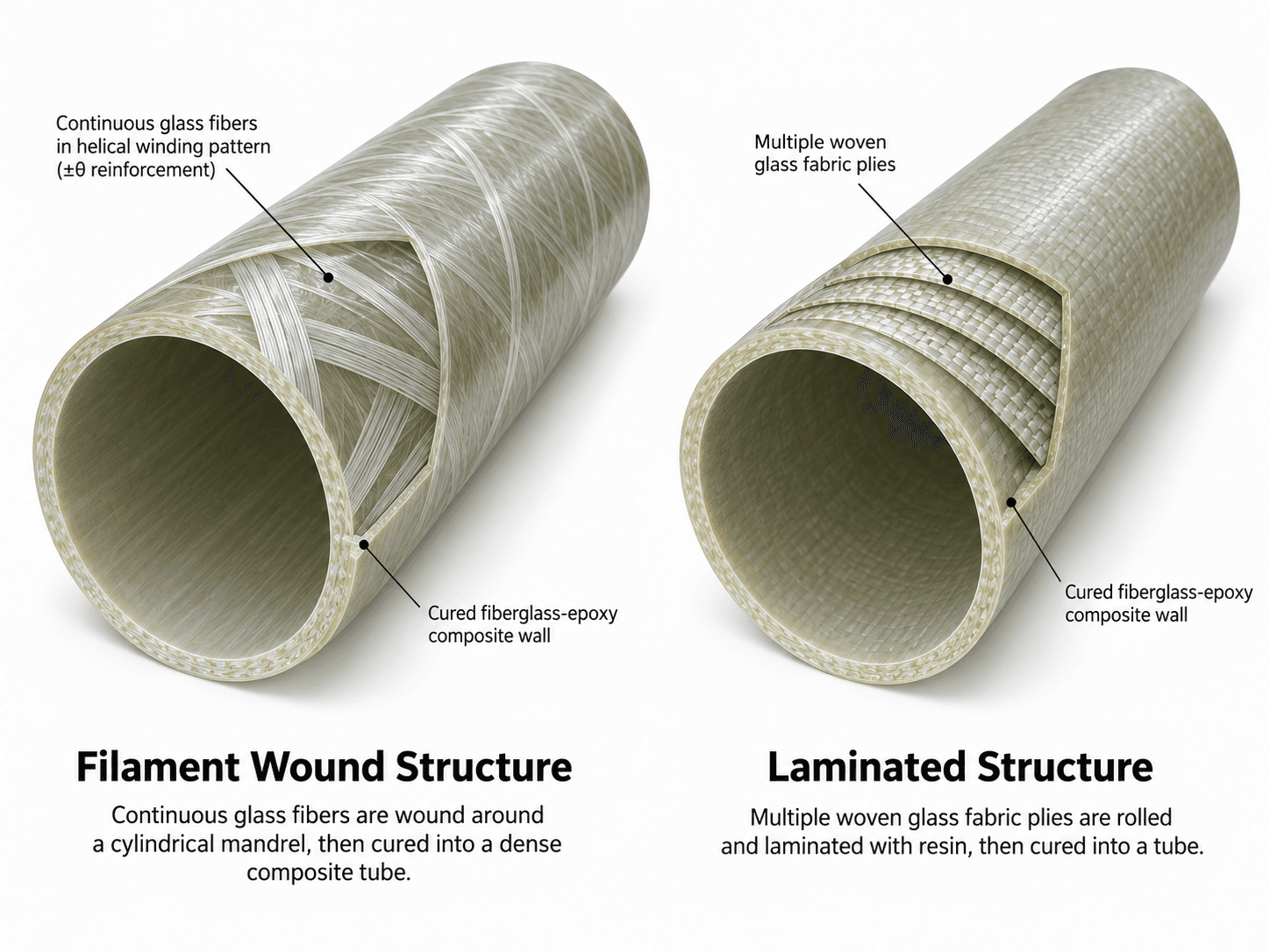
However, a laminated tube and a filament wound tube do not have the same reinforcement architecture.
That difference becomes important when the component must handle specific mechanical loads or when a large customized cylindrical structure is required.
Filament Wound vs. Laminated Tube: Key Differences
| Selection Factor | Filament Wound Epoxy Fiberglass Tube | Laminated Epoxy Fiberglass Tube |
|---|---|---|
| Reinforcement structure | Continuous fibers wound around the tube axis at controlled orientations | Layered or rolled glass reinforcement |
| Product geometry | Manufactured directly as a tubular composite structure | Tube formed from laminated reinforcement |
| Custom diameter | Well suited to drawing-based tube dimensions, subject to tooling and manufacturing review | Availability often depends on standard material sizes or manufacturing capability |
| Wall thickness | Can be designed around required tube geometry | Depends on laminate construction and available product form |
| Load direction | Fiber orientation can be reviewed around axial, hoop and combined loading | Mechanical behavior follows the laminated reinforcement structure |
| Machining | Cutting, drilling, slotting, turning and end machining can be reviewed | Machining is also possible, subject to material grade and structure |
| Application approach | Often selected as an engineered tube for a specific electrical assembly | Often selected first by laminate grade and then machined into the required component |
| Best selection method | Drawing + application + load + insulation requirement | Grade + dimensions + application + finished-part requirement |
Neither construction is automatically superior.
The important question is whether the material structure matches the function of the finished component.
1. Consider the Mechanical Load
Mechanical loading is one of the most important differences to review.
A tube installed inside high-voltage equipment may experience:
- Axial loading
- Radial or hoop loading
- Compression
- Bending
- Assembly stress
- Combined mechanical loads
With filament winding, fiber orientation is part of the tube manufacturing design. This makes it possible to discuss the reinforcement structure together with the expected loading condition.
For a purchasing engineer, this means that a drawing showing only ID, OD and length may not always be enough.
If the tube performs a structural function, the supplier should also understand how the component is loaded in the final equipment.
Practical RFQ Tip
When the insulation tube carries mechanical load, include the expected load direction and assembly function in the inquiry whenever available.
This helps prevent a supplier from evaluating the component only as a dimensional FRP tube.
2. Review the Required Tube Size
Dimensions can strongly influence the manufacturing route.
For a simple small component that matches an established laminated tube size, laminated material may be practical.
For a customized tube with specific:
- ID
- OD
- Wall thickness
- Length
- Interface dimensions
- End geometry
a filament wound structure may provide greater flexibility, depending on tooling and production feasibility.
Large-diameter or long electrical insulation tubes especially require a manufacturing review rather than selection based only on a generic material grade.
Need to check whether a custom size is feasible? Send the ID, OD, length and drawing for technical review before finalizing the specification.
For a broader selection workflow, see How to Select the Right Epoxy Fiberglass Filament Wound Tube for Electrical Insulation Applications.
3. Do Not Select by "G10" or "G11" Alone
One common sourcing problem is using a familiar material name as the complete specification.
For example, a drawing may simply state:
Glass epoxy tube, G10
But this description may not fully define:
- Tube construction
- Reinforcement orientation
- Required electrical properties
- Temperature conditions
- Mechanical load
- Dimensional tolerance
- Surface requirement
- Machining requirement
- Inspection method
For replacement parts, this is particularly important.
If the original component was produced using a specific manufacturing process, substituting another glass-epoxy structure based only on a similar material description may introduce unnecessary technical risk.
The original drawing, application and performance requirement should be reviewed together.
4. Consider Machining and Interface Features
Insulation tubes are often not used exactly as they come from the molding or winding process.
The finished component may require:
- Precision cutting
- Turning
- Bore machining
- Grooves
- Slots
- Drilled holes
- Stepped ends
- Threaded or bonded interfaces
- Controlled end dimensions
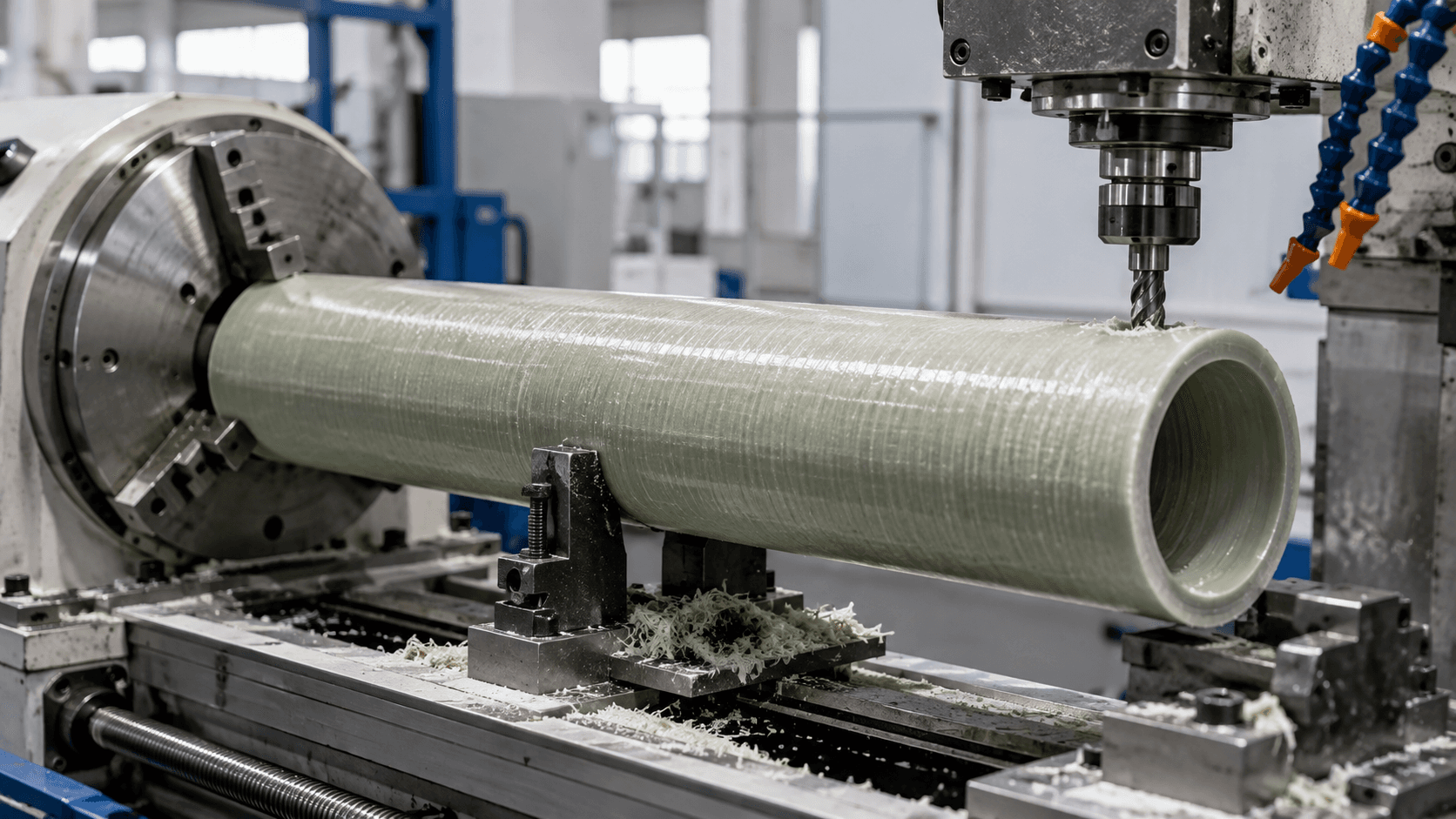
These features may affect minimum wall thickness, machining allowance and tolerance planning.
The engineering question should therefore be:
Can the selected tube structure still meet the required dimensions and function after machining?
This is more useful than asking whether a supplier can simply "make the tube."
For custom electrical equipment, final machining requirements should ideally be included on the drawing before quotation.
5. Review Electrical Requirements Together With Structure
Both laminated glass epoxy materials and filament wound epoxy fiberglass composites can be used in electrical insulation applications.
However, electrical performance should never be assumed from the generic product category alone.
Important inputs may include:
- Equipment type
- Voltage level
- Insulation function
- Operating environment
- Required material specification
- Customer test requirements
- Applicable standards
- Acceptance criteria
The test scope should be agreed according to the actual application and customer requirement.
This is particularly important for high-voltage equipment, where electrical insulation, mechanical support and dimensional interfaces may all depend on the same component.
6. Which Tube Is Better for High-Voltage Equipment?
There is no universal answer.
For high-voltage equipment such as:
- Surge arresters
- CT/PT/CVT equipment
- Transformer-related assemblies
- SF6 switchgear
- GIS/HGIS equipment
- Bushings
- Breakers
- Fuses
- Tap changers
the tube should be selected according to the specific assembly.
A filament wound tube is particularly worth evaluating when the component requires a combination of:
- Electrical insulation
- Structural mechanical support
- Customized cylindrical dimensions
- Controlled interfaces
- Drawing-based machining
A laminated tube may remain appropriate when the specified laminate grade, available dimensions and finished-part requirements already match the application.
The correct decision should come from engineering requirements-not from the assumption that one manufacturing process is always better.
A Simple Selection Checklist
Before choosing between filament wound and laminated epoxy fiberglass tubes, confirm the following information:
Product Geometry
- ID
- OD
- Wall thickness
- Length
- Tolerances
Application
- Equipment type
- Position of the tube in the assembly
- Insulation function
- Structural function
Mechanical Conditions
- Axial load
- Hoop load
- Compression
- Bending
- Other assembly loads
Electrical Conditions
- Voltage level
- Insulation requirement
- Required standard or material specification
- Test requirement
Processing
- Cutting
- Turning
- Drilling
- Slotting
- Grooves
- End machining
- Other interface features
Commercial Information
- Prototype quantity
- Annual quantity
- Required delivery schedule
- Drawing revision
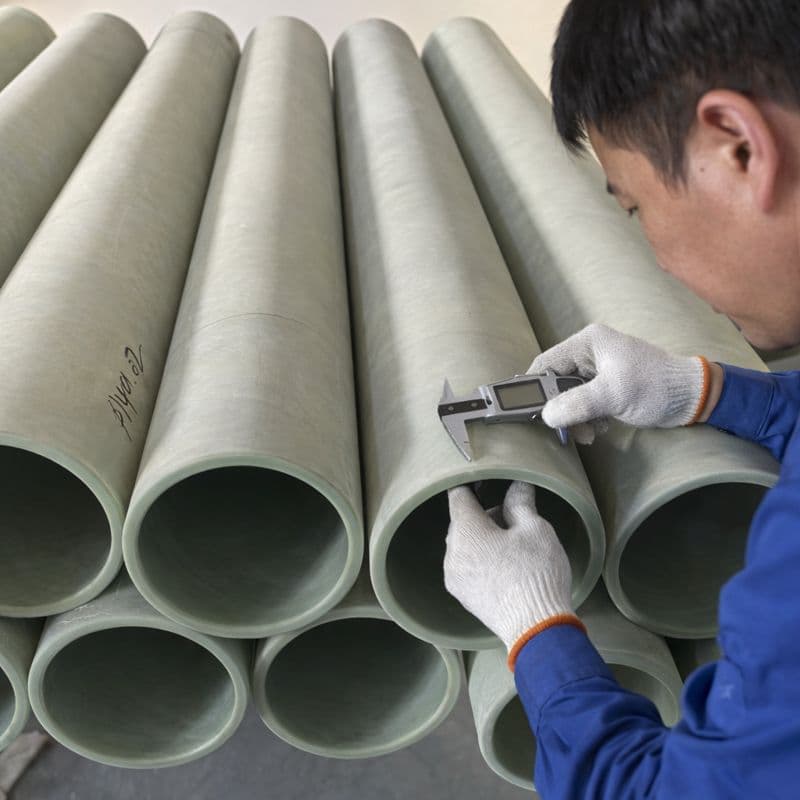
Providing these items at the RFQ stage allows the manufacturer to evaluate the actual component instead of quoting a generic tube.
Frequently Asked Questions
Is a filament wound epoxy tube the same as a G10 tube?
Not necessarily.
Both may use glass fiber and epoxy resin, but their reinforcement structure and manufacturing processes can be different. The correct comparison should be based on the actual material specification, tube construction and application requirement.
Can filament wound tubes replace laminated tubes?
Possibly, but replacement should not be assumed automatically.
The original material specification, dimensions, mechanical loading, electrical requirements, machining and validation requirements should be reviewed before changing the manufacturing structure.
Can filament wound insulation tubes be machined?
Yes, machining such as cutting, drilling, slotting, turning and end processing can be evaluated according to the drawing.
The final machining scope depends on the tube dimensions, wall thickness and approved component design.
What information should I send for a comparison?
A technical drawing is the best starting point.
Also provide the equipment application, ID, OD, length, wall thickness, material requirement, operating conditions, machining details, quantity and any required inspection or testing.
Conclusion
Filament wound and laminated epoxy fiberglass tubes belong to the same broad family of glass-reinforced electrical insulation materials, but their structures are different.
For buyers, the decision should not be reduced to a simple material-name comparison.
The most reliable selection process is to review:
application -> load -> dimensions -> insulation requirement -> machining -> inspection
For customized high-voltage components, this approach helps the supplier understand the complete function of the tube before recommending a manufacturing route.
If you are evaluating a filament wound tube against an existing laminated tube, send your drawing and application requirements to WEENOOR for a technical review before requesting the final quotation.
CTA
Send Your Drawing: Upload through the inquiry form
Request a Quote: Contact WEENOOR